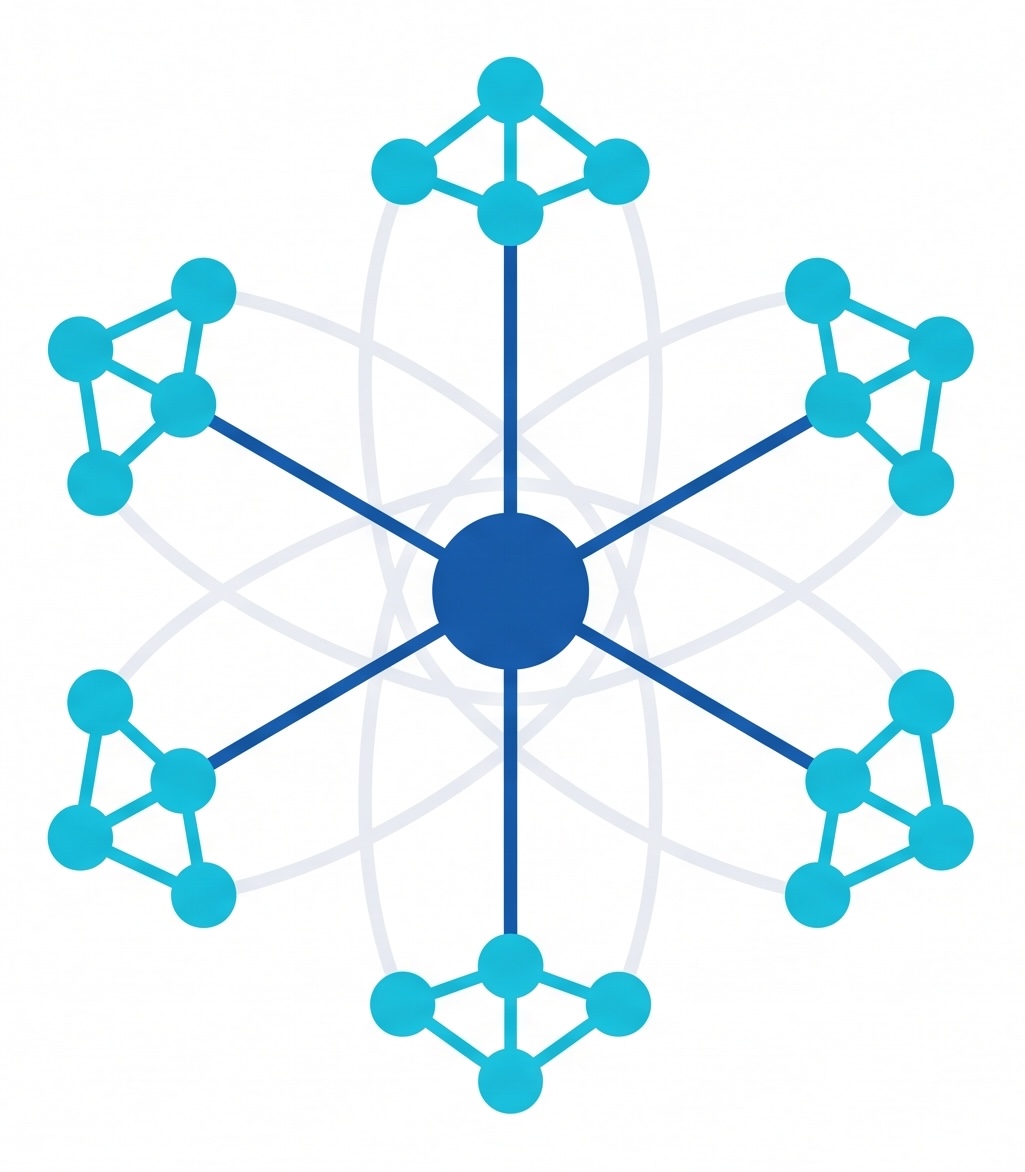
Collaborative and Distributed Edge Inference
Combine compute and memory across edge devices through request distribution, model partitioning and dynamic coordination as loads and node availability change.
How can edge devices cooperate when one device cannot hold a model or serve all requests? We study workload distribution and determine when the gains outweigh communication, coordination and reconfiguration costs.
Research topics
Request distribution: different devices independently serve complete requests.
Model partitioning and pipelines: devices execute different layers and exchange intermediate results.
Tensor parallelism: nodes jointly execute a layer and exchange partial results.
Dynamic coordination based on resources, load, data location and node state.
Examples
Compare against the best feasible single-device configuration, fixed allocation and dynamic collaboration. Measure service capacity, latency, memory requirements and transfer costs while respecting data permissions and node eligibility.